Ortigia is the historic heart of Syracuse: an island just over a kilometre long, joined to the city by two bridges, where you wander among Greek temples and Baroque churches with the sea on three sides. You can explore all of it on foot. Here is how to spend two unhurried days.
Day 1, morning: from the Temple of Apollo to the market
As you enter Ortigia over the Ponte Umbertino, you come straight to the remains of the Temple of Apollo, from the 6th century BC, one of the oldest Doric temples in Sicily.
A few steps away is the Ortigia market: stalls of fish, citrus fruit, cheese, spices and street food. It is open in the morning, except on Sundays, and it is the place to shop if you are cooking in your apartment.
Piazza Archimede and Via della Maestranza
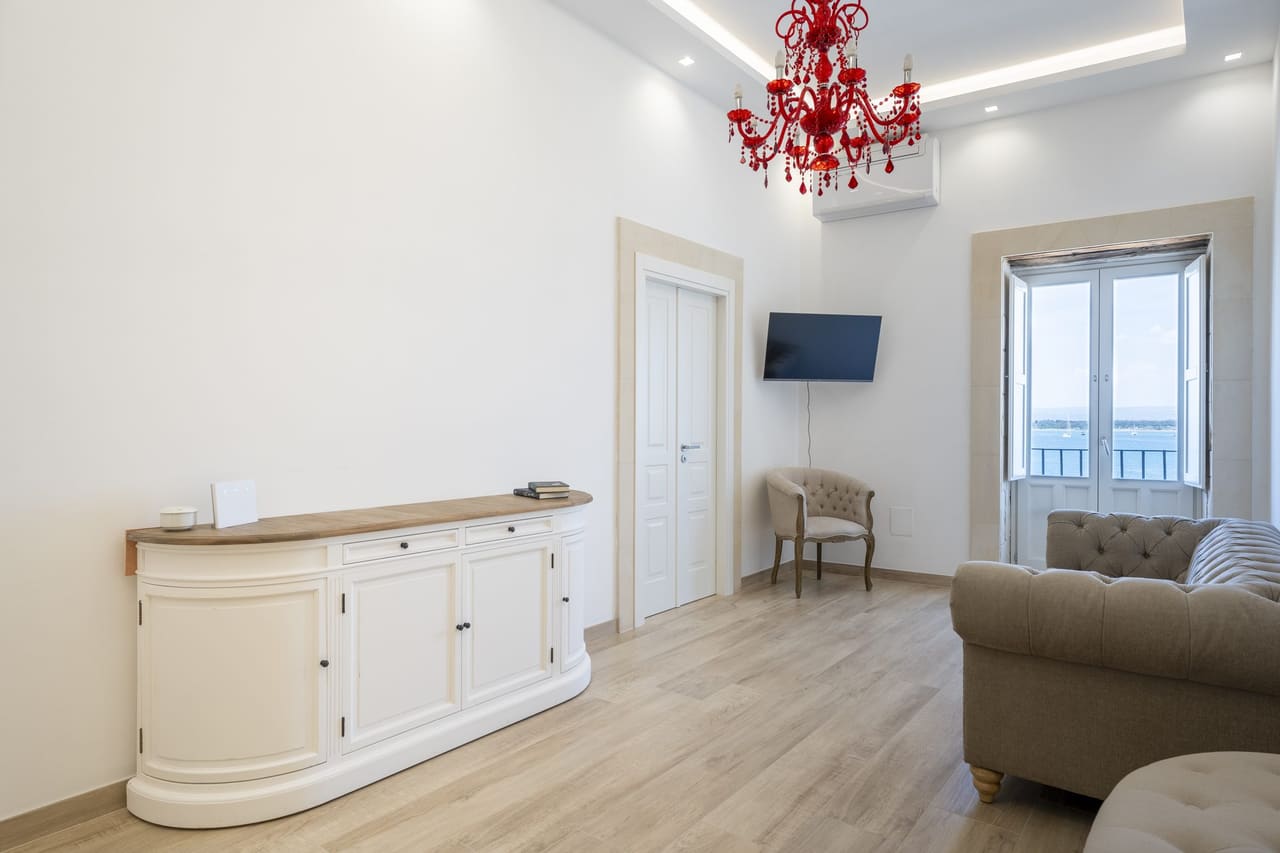
Heading towards the centre of the island you reach Piazza Archimede, with the Fountain of Diana and the period palazzi around it. The balconies of our Ortigia Inner Suite look out over this square.
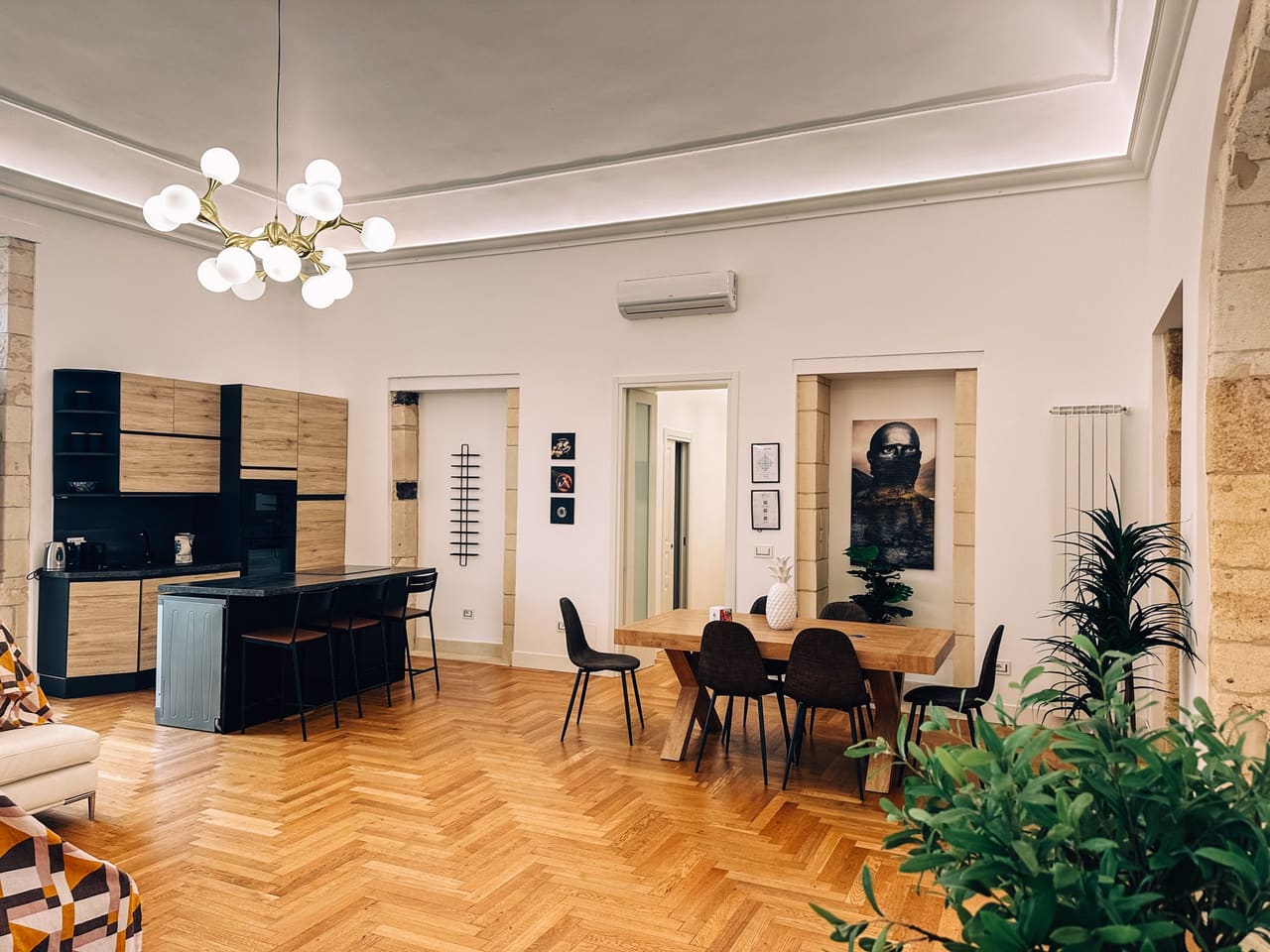
From here starts Via della Maestranza, one of Ortigia's most elegant streets, lined with Baroque palazzi and hidden courtyards: this is where you will find Maison Dumah, in a building dating from 1760.
Day 1, afternoon: Piazza Duomo and the Fountain of Arethusa
Piazza Duomo is one of the most beautiful Baroque squares in Italy. The Cathedral incorporates the Doric columns of the 5th-century BC Temple of Athena, still visible along the aisles and on the outer wall: twenty-five centuries of history in a single building.
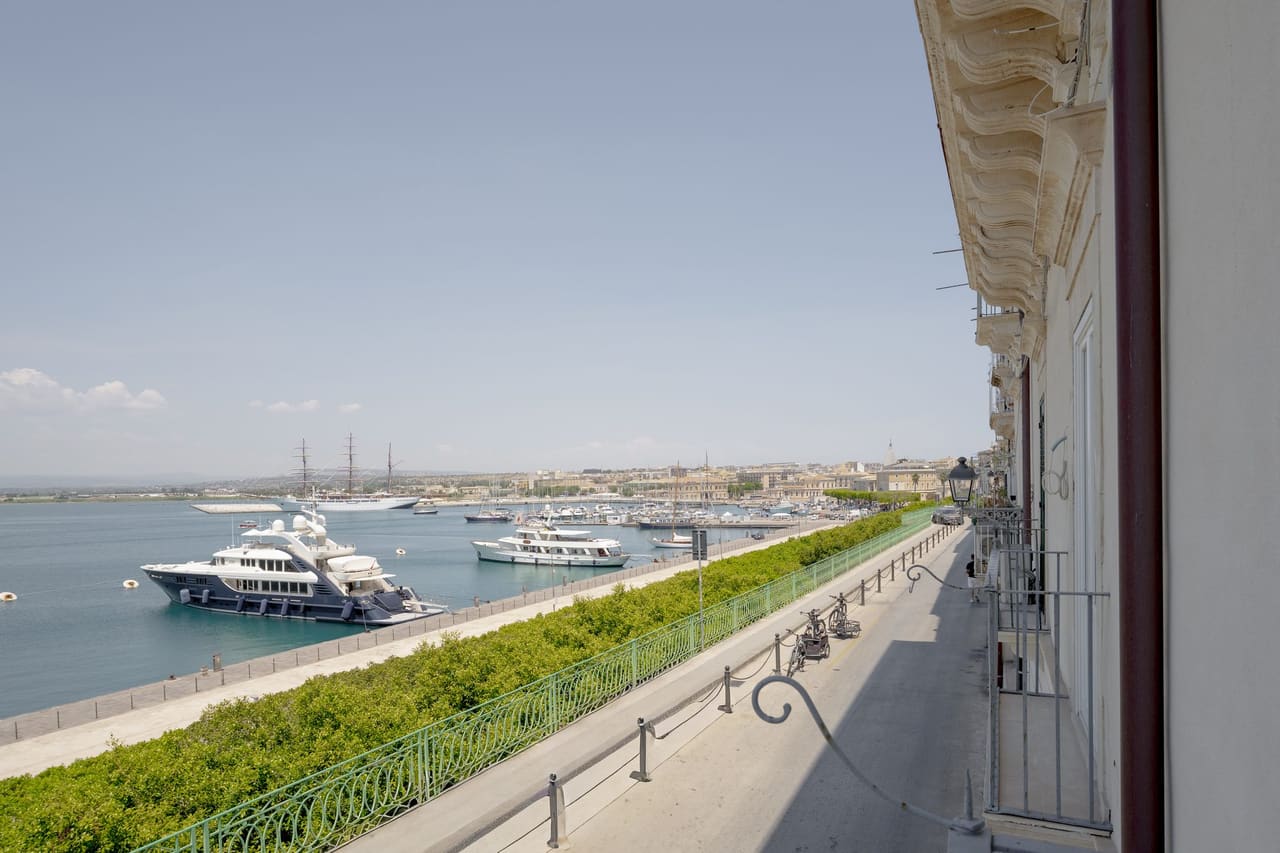
Walking down towards the sea you reach the Fountain of Arethusa, a freshwater spring just steps from the sea where papyrus grows. The Lungomare Alfeo seafront, which starts here, is the sunset stroll par excellence, with the sun going down over the Porto Grande. Ortigia Prestige is close to the seafront.
Day 2, morning: the Giudecca, Palazzo Bellomo and Castello Maniace
The Giudecca is the old Jewish quarter: narrow lanes, archways and a Jewish ritual bath (mikveh) carved into the rock, which you can visit.
Palazzo Bellomo houses the regional gallery, home to Antonello da Messina's Annunciation.
At the southern tip of the island stands Castello Maniace, a fortress built for Frederick II in the 13th century and surrounded by the sea.
Day 2, afternoon: the Neapolis archaeological park
Outside Ortigia, about half an hour on foot or a few minutes by taxi, the Neapolis archaeological park brings together the Greek Theatre, the Ear of Dionysius and the Roman Amphitheatre. Between May and July the Greek Theatre hosts its season of classical plays: if you are visiting then, book your tickets in advance.
If you have time, round off the day at the Paolo Orsi regional archaeological museum, one of the most important in Europe for Greek Sicily.
Practical tips
- Most of Ortigia is a limited traffic zone: leave the car in a car park at the entrance to the island and get around on foot.
- In summer the hottest hours are the right time for a swim: see our guide to the beaches near Syracuse.
- With an extra day, Noto, Marzamemi and the Vendicari nature reserve are well worth the trip.
- Opening hours of museums and sites change with the seasons: check them before you go, or ask us on WhatsApp.